

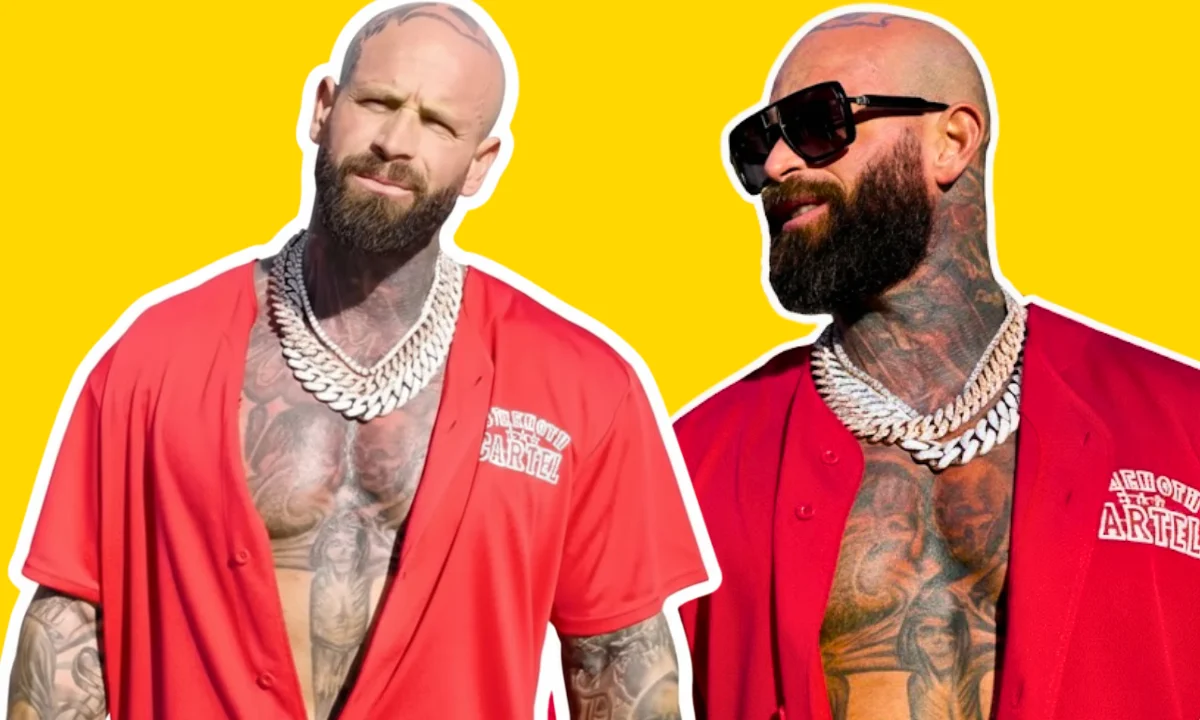
Wes Watson is an American fitness entrepreneur, motivational speaker, mindset coach, author, and social media personality, widely known for transforming his life after serving nearly a decade in prison. He is the founder of Watson Fit, the creator of the viral YouTube channel GP Penitentiary Life, and the author of Non-Negotiable: Ten Years Incarcerated – Creating the Unbreakable Mindset.
Today, Wes Watson is recognized as one of the most polarizing and influential voices in the self-discipline, fitness motivation, and personal development space. His rise to prominence is rooted in a raw, experience-based narrative — one that emphasizes discipline, accountability, structure, and personal responsibility over comfort or excuses.
Unlike traditional life coaches or certified fitness professionals, Watson’s authority is grounded in lived experience. His message resonates particularly with audiences searching for mental toughness, motivation after failure, and extreme self-discipline. Through his content, Watson frequently addresses topics such as:
- Prison mindset and rehabilitation
- Discipline over motivation
- Masculinity, responsibility, and self-respect
- Physical fitness as a gateway to mental control
- Entrepreneurship after incarceration
Early Life & Background
Wesley Watson was born on November 19, 1983, in California, United States. Raised primarily in Southern California, including areas such as San Diego and Oceanside, Watson’s early environment played a crucial role in shaping his worldview and eventual life choices.
Family Environment & Childhood Influences
Watson has spoken openly about growing up around instability, exposure to drugs, and street culture. While not all details of his family life are public, Watson has credited early influences — particularly an older brother — with introducing him to marijuana use and distribution at a young age, reportedly around 14 years old.
This early exposure normalized illegal activity and gradually pushed him toward a lifestyle centered on fast money, risk, and reputation, common themes in at-risk urban environments. From an SEO standpoint, this period is often referenced in searches related to:
- Wes Watson early life
- Wes Watson childhood
- Wes Watson before prison
Education & Early Choices
Watson did not follow a traditional academic path. He dropped out of school before completing high school, choosing instead to immerse himself in street life. By his late teens and early twenties, Watson was already deeply embedded in criminal activity, primarily revolving around drug distribution and violence.
This lack of formal education later became a key talking point in his content. Watson often emphasizes that discipline and self-education can outweigh formal schooling when paired with consistent action — a message that resonates strongly with audiences searching for success without college or entrepreneurship without a degree.
Criminal History & Incarceration
Wes Watson’s criminal history marks the turning point in his life story and is one of the most searched aspects of his biography. Queries such as “Why did Wes Watson go to prison?”, “How long was Wes Watson in prison?”, and “Wes Watson crimes” consistently trend online.
Arrest & Charges
In his early twenties, Watson’s involvement in drug trafficking and violent incidents ultimately led to his arrest and conviction in California state court. While exact legal records are not publicly detailed in full, Watson himself has stated in multiple interviews that he received a lengthy prison sentence, serving approximately 9 to 10 years in California state prison.
He was housed in high-security environments, including facilities known for gang politics and violence. Watson has repeatedly described the prison system as a place where weakness is exploited, and survival depends on mental strength, physical conditioning, and strict adherence to personal codes.
Life Inside Prison
According to Watson’s own accounts, prison life forced him to confront the consequences of his decisions. Initially entering prison angry and reactive, Watson gradually realized that survival — and eventual growth — required structure, discipline, and emotional control.
This environment became the foundation for what would later evolve into the Watson mindset philosophy, built on:
- Early morning routines
- Daily bodyweight workouts
- Mental conditioning through reading
- Avoidance of destructive prison politics
- Extreme accountability for actions and reactions
Transformation in Prison: The Making of the Unbreakable Mindset
Wes Watson’s true transformation did not begin after his release from prison—it began inside the prison system, under conditions that demand either rapid adaptation or complete psychological collapse. This phase of his life represents the foundation of his mindset, discipline philosophy, and later success as a fitness coach and motivational figure.
When Watson entered California state prison, he has described himself as emotionally volatile, reactive, and driven by ego. In an environment where impulsive behavior can escalate into violence or extended sentencing, these traits quickly proved dangerous. Prison forced Watson to confront a reality where self-control was not optional—it was survival.
Over time, he began to observe that inmates who thrived did not do so through intimidation or aggression alone, but through routine, discipline, and emotional regulation. This realization marked a psychological shift. Instead of resisting the environment, Watson chose to dominate what he could control: his mind, his body, and his daily actions.
Physical training became his anchor. With no access to traditional gym equipment, Watson relied on bodyweight exercises, performing push-ups, burpees, pull-ups, and core movements daily. These workouts were not designed for aesthetics but for consistency and endurance. Training every day—without rest days—became a form of mental conditioning, teaching him to act regardless of comfort or motivation.
Equally important was mental discipline. Watson committed himself to reading and self-education, studying material on psychology, self-mastery, and personal accountability. Books became tools for cognitive restructuring, helping him dismantle victimhood thinking and replace it with ownership and responsibility.
By the time his sentence neared its end, Watson had built an internal framework rooted in structure, routine, and accountability. Prison was no longer something that defined him negatively—it became the environment that forged his identity.
Life After Prison: Rebuilding Identity and Creating a Brand
Wes Watson was released from prison around 2018, entering a world dramatically different from the one he had left. Social media had become a dominant force, and digital platforms offered unprecedented opportunities for individuals with compelling stories to reach global audiences.
Rather than attempting to blend quietly into society, Watson chose visibility. He began sharing his experiences openly, speaking with intensity and honesty about prison life, personal failure, and transformation. Early appearances on established platforms quickly gained traction, as viewers responded to his unapologetic tone and lived experience.
Recognizing the power of direct communication, Watson launched his own platform—GP Penitentiary Life—where he could control his message without dilution. His content focused on lessons learned from incarceration, discipline in daily life, and the importance of personal responsibility.
What separated Watson from others telling similar stories was execution. He posted consistently, maintained a clear identity, and refused to soften his message for mass appeal. This authenticity accelerated trust and loyalty among viewers who felt underserved by traditional motivational figures.
As his audience grew, Watson transitioned from content creation to entrepreneurship. He identified a demand not just for inspiration, but for structure and accountability, and he built his brand around delivering exactly that.
Watson Fit: Structure, Coaching, and Business Execution
Watson Fit emerged as the formal expression of Wes Watson’s philosophy. Positioned as more than a fitness program, it operates as a discipline-based lifestyle system that integrates physical training, mindset conditioning, and daily accountability.
The structure of Watson Fit reflects Watson’s belief that transformation requires layered commitment. Entry-level programs provide foundational routines, while higher-tier coaching introduces personalized accountability and direct mentorship. Clients are expected to follow strict schedules, adhere to non-negotiable habits, and execute daily actions without excuses.
Fitness within Watson Fit serves as a gateway, not an end goal. Physical training is used to develop mental resilience, consistency, and self-respect. Nutrition, sleep, and time management are treated as extensions of discipline rather than optional lifestyle choices.
At the highest level, Watson offers elite mentorship focused on performance, leadership, and personal execution. These programs are intentionally selective, designed for individuals willing to accept confrontation and responsibility rather than encouragement alone.
Watson Fit’s success lies in its clarity. It does not promise comfort, ease, or quick results. Instead, it offers a structured path for those willing to submit to discipline as a way of life.
Social Media as a Discipline Amplifier
Wes Watson uses social media not as a place for entertainment, but as a discipline amplifier. His digital presence reinforces the same principles he teaches—consistency, ownership, and execution.
On long-form platforms, Watson delivers extended breakdowns of mindset, routine, and accountability. These videos establish authority and allow for nuance. On short-form platforms, he delivers high-impact messages designed to interrupt complacency and provoke action.
Visual consistency—training footage, direct eye contact, minimal editing—strengthens brand identity and reinforces authenticity. His content does not chase trends; it reinforces principles.
Social media functions as both a communication tool and a filtering mechanism, attracting individuals aligned with his philosophy while naturally repelling those seeking comfort or validation.
Income, Assets, and Financial Growth
Wes Watson’s financial success reflects the scalability of discipline-driven entrepreneurship. His income is generated through multiple channels, with coaching and mentorship forming the foundation.
Recurring revenue from programs and subscriptions provides stability, while premium mentorship and speaking engagements generate high-value returns. Book sales, digital platforms, and brand extensions contribute additional income streams.
Beyond digital revenue, Watson has invested in physical assets, including real estate, signaling a shift toward long-term wealth preservation. His financial trajectory demonstrates how personal transformation, when paired with strategic execution, can evolve into sustainable economic success.
Coaching Style and Philosophy in Practice
Wes Watson’s coaching style is intentionally confrontational. He rejects emotional cushioning and prioritizes results over comfort. Clients are expected to act, not negotiate with their emotions.
Discipline is framed as a daily decision, reinforced through routine and repetition. Identity is built through action, not intention. Excuses are treated as self-betrayal.
This approach resonates with individuals who have tried softer methods without success. It also explains why Watson’s audience is deeply loyal—his system demands effort, but it delivers clarity and structure.
Influence, Criticism, and Cultural Impact
Watson’s influence extends beyond fitness into broader discussions about masculinity, accountability, and rehabilitation. Supporters credit his message with helping them regain control over their lives, while critics argue his approach lacks nuance.
Debate surrounding Watson is constant, but his relevance remains steady. Engagement, discussion, and replication of his methods signal cultural impact, regardless of opinion.
Legacy in Progress
Wes Watson’s story is still unfolding. From incarceration to influence, his trajectory reflects the power of structured discipline applied consistently over time. His legacy is not defined by perfection, but by execution—day after day, without negotiation.
Conclusion
Wes Watson’s life stands as a powerful example of how discipline, when applied consistently and without compromise, can completely redefine a person’s trajectory. His transformation did not come from privilege, formal education, or external rescue—it emerged from radical self-accountability forged in one of the most unforgiving environments imaginable.
Prison stripped Watson of excuses and illusions, forcing him to confront his habits, reactions, and identity at the most fundamental level. Rather than allowing incarceration to harden him into resignation, he used it as a controlled environment for rebuilding himself through structure, routine, and self-mastery. That internal transformation became the foundation for everything that followed.
After release, Watson translated lived experience into purpose. He built a brand rooted in execution rather than inspiration, offering systems instead of slogans. Through Watson Fit and his digital platforms, he has influenced thousands of people seeking control over their health, mindset, and direction in life. His message resonates because it is not theoretical—it is tested, enforced, and lived daily.
Wes Watson is not without controversy, nor does he aim for universal approval. His approach is demanding, confrontational, and intentionally uncomfortable. Yet that is precisely why it works for those willing to commit. He represents a segment of modern self-development that prioritizes responsibility over reassurance and action over intention.
Ultimately, Wes Watson’s story is not just about fitness, business, or motivation. It is about identity—how it is built, reinforced, and protected through daily discipline. His journey illustrates that change is not a moment of inspiration, but a relentless practice. And for those willing to submit to that process, transformation is not only possible—it is inevitable.
Frequently Asked Questions
Who is Wes Watson?
Wes Watson is an American fitness entrepreneur, motivational speaker, author, and mindset coach known for transforming his life after serving nearly a decade in prison and building the Watson Fit brand.
Why did Wes Watson go to prison?
Wes Watson was incarcerated in California for crimes related to drug distribution and violent activity during his early adulthood, which ultimately led to a lengthy state prison sentence.
How long was Wes Watson in prison?
Wes Watson served approximately nine to ten years in California state prison before being released around 2018.
What is Wes Watson known for?
He is known for his discipline-based coaching philosophy, his YouTube channel GP Penitentiary Life, and his emphasis on accountability, structure, and personal responsibility.
What is Watson Fit?
Watson Fit is Wes Watson’s fitness and mindset coaching platform that combines physical training, structured routines, and accountability systems designed to build discipline and consistency.
Is Wes Watson a certified fitness trainer?
Wes Watson’s authority is based on lived experience and personal transformation rather than traditional fitness certifications, which has been both a point of appeal and public debate.
How does Wes Watson make money?
He earns income through coaching programs, mentorships, digital products, book sales, speaking engagements, social media platforms, and investments.
What is Wes Watson’s net worth?
Estimates place Wes Watson’s net worth in the high seven-figure to low eight-figure range, depending on valuation methods and reported assets.
What book did Wes Watson write?
Wes Watson authored Non-Negotiable: Ten Years Incarcerated – Creating the Unbreakable Mindset, which outlines his philosophy on discipline and self-mastery.
Is Wes Watson controversial?
Yes, his intense communication style and uncompromising coaching approach have generated both strong support and criticism, making him a polarizing figure in the self-development space.
What is Wes Watson’s main message?
His core message centers on discipline over motivation, personal accountability, structured routines, and taking full responsibility for one’s actions and outcomes.
Who is Wes Watson’s content for?
His content primarily resonates with individuals seeking structure, mental toughness, physical discipline, and accountability—particularly those rebuilding after failure or major life setbacks.
ALSO READ: How old is Lil Meech
Anne Kellogg is the creative mind behind NamesPerl, where she shares her passion for names. With 4 years of experience in crafting unique and catchy names, Anne helps readers discover the perfect words to express identity, creativity, and meaning.