

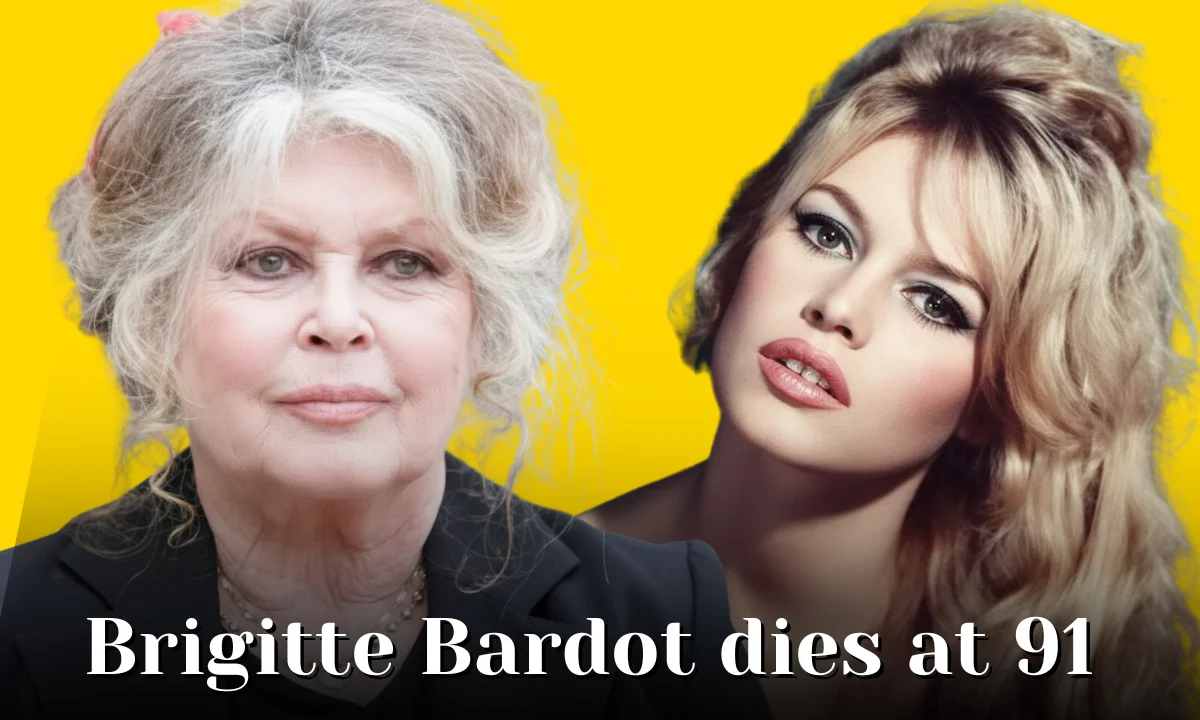
On December 28, 2025, the world lost a woman who was described not merely as a movie star, but as a “cultural earthquake.” Brigitte Anne-Marie Bardot, the French actress, singer, model, and activist, died at the age of 91 at her home, “La Madrague,” in Saint-Tropez. Her passing marks the end of an era for global cinema and social history, as she was a figure who fundamentally changed how the world perceived France, femininity, and freedom. Throughout her life, Bardot remained a profound paradox: a pioneer of female sexual emancipation on screen and a deeply polarizing political figure off-screen.
Early Life: The Roots of Rebellion
Born on September 28, 1934, in the 15th arrondissement of Paris, Bardot was raised in a prosperous and conservative Catholic family. Her father, Louis Bardot, was an engineer and industrialist, while her mother, Anne-Marie Mucel, was the daughter of an insurance director. Despite the outward appearance of luxury in their seven-bedroom apartment in the 16th arrondissement, Bardot recalled her childhood as “difficult” and restrictive.
Her father was a strict disciplinarian who demanded perfect manners and occasionally used a horse whip for punishment. A pivotal trauma occurred when she and her sister, Mijanou, broke a favorite vase; her father whipped them 20 times and subsequently forced them to address their parents with the formal French “vous.” This incident led to a deep-seated resentment and fueled her future rebellious lifestyle.
An aspiring ballerina, Bardot began her training at age seven and later attended the Conservatoire de Paris, studying under Russian choreographer Boris Knyazev. Her transition into the limelight began at age 15 when she was hired as a junior fashion model for Elle magazine. Her parents initially opposed her interest in acting, with her father threatening to send her to school in England to end her relationship with director Roger Vadim. In a desperate act of defiance, the teenage Bardot attempted suicide by putting her head in a lit oven, eventually forcing her parents to accept her path—and her relationship with Vadim—on the condition they marry when she turned 18.
Cinema and the Birth of a Sex Symbol
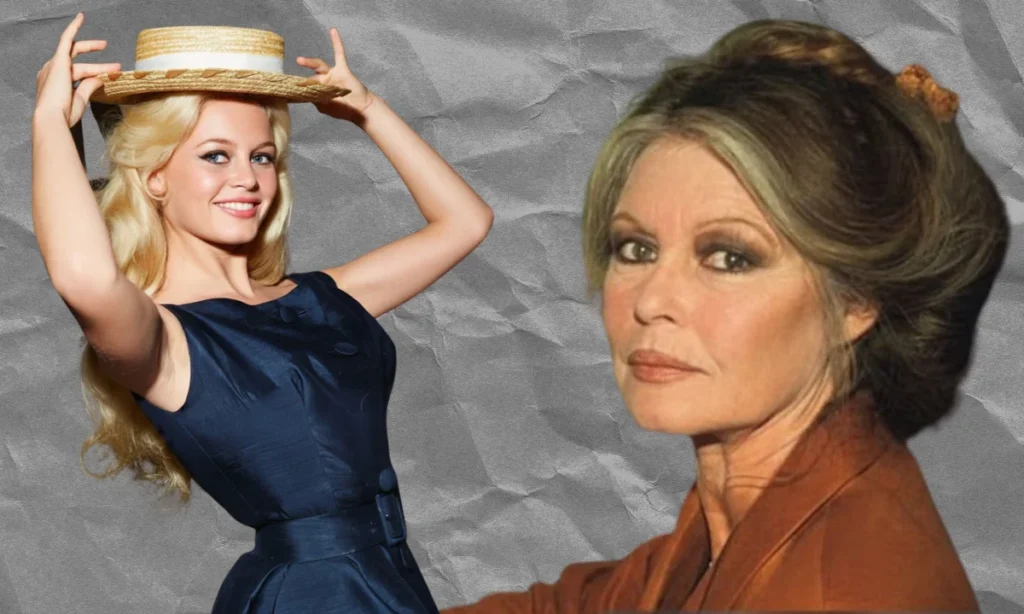
Bardot’s film career began in 1952, but it was the 1956 film “And God Created Woman”, directed by Vadim, that transformed her into an international phenomenon. In the film, Bardot portrayed an uninhibited, hedonistic teenager, scandalizing audiences and fascinating critics. In the United States, the film earned a then-astonishing $4 million, making it the highest-grossing foreign film of its time.
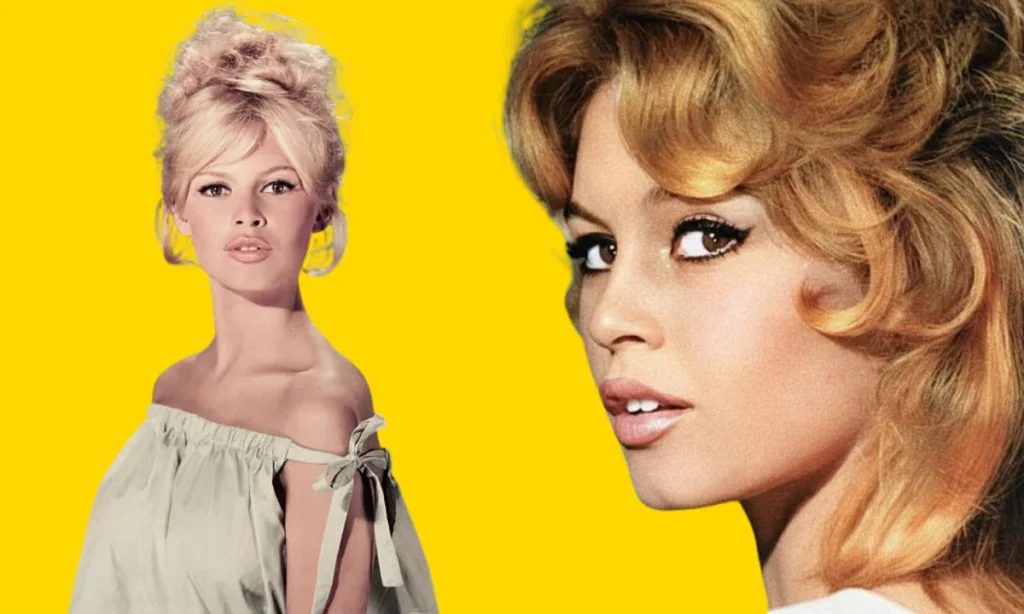
While Hollywood took notice, Bardot famously resisted the studio system, remaining deeply and defiantly French. She became known as the “sex kitten,” a title reinforced by her voluptuous figure, tousled blonde hair, and signature pout. Beyond the “sex kitten” label, she earned critical respect for her dramatic depth in Henri-Georges Clouzot’s “The Truth” (1960), for which she won a David di Donatello Award for Best Foreign Actress.
Bardot further solidified her place in modern cinema history with Jean-Luc Godard’s “Le Mépris” (Contempt) in 1963, now considered a masterpiece. Over her career, she acted in 47 films, ranging from high-art dramas to popular westerns like Viva Maria! (1965), where she starred alongside Jeanne Moreau. French President Charles de Gaulle once remarked that Bardot was a French export as important as Renault cars. By 1969, her face had become so inseparable from the image of France that she was chosen as the model for Marianne, the official symbol of the French Republic.
Fashion and Musical Impact
Bardot’s influence extended far beyond the silver screen. She became a global style icon, popularizing the bikini after being photographed in one at the Cannes Film Festival in 1953. She is also the namesake of the “Bardot neckline,” a wide-open neck style that exposes both shoulders. Her preference for gingham—most notably the pink checkered dress she wore at her wedding to Jacques Charrier—turned the fabric into a worldwide fashion trend.
In music, Bardot recorded more than 60 songs, many in collaboration with the legendary Serge Gainsbourg. Their recording of “Je t’aime… moi non plus” was originally shelved at Bardot’s request to avoid a scandal with her then-husband, Gunter Sachs, only to be released decades later in 1986. She was also a muse for musicians like John Lennon and Paul McCartney, who were reportedly idolized her during their youth.
Retirement and Animal Rights Activism
In 1973, at the age of 39 and at the peak of her fame, Bardot shocked the world by announcing her complete retirement from the entertainment industry. She famously stated, “I gave my youth and beauty to men, I give my wisdom and experience to animals.”
For the next 50 years, she devoted her life to animal welfare. In 1986, she established the Brigitte Bardot Foundation, funding it by auctioning off her personal belongings and jewelry. Her activism was militant and global:
- Seal Pups: In 1977, she traveled to the Canadian ice floes to condemn the slaughter of baby seals, posing for world-renowned photos with the pups.
- Stray Dogs: She donated over $140,000 for a mass neutering and adoption program for stray dogs in Bucharest.
- Industrial Practices: She was a fierce opponent of the consumption of horse meat and ritual slaughter without prior stunning.
- Whaling and Dolphins: She lobbied world leaders, including the Queen of Denmark, to stop the killing of dolphins in the Faroe Islands.
Her foundation grew to employ hundreds of people and manage thousands of animal rescues, becoming a global benchmark for animal protection.
Controversies and Political Leanings
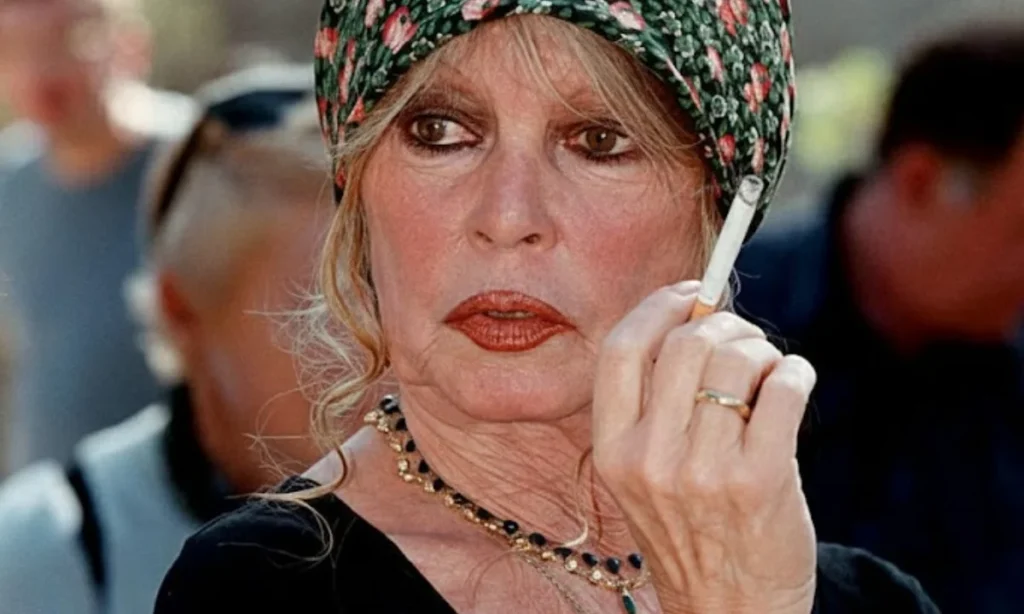
The latter half of Bardot’s life was marked by extreme political polarization. Starting in the 1990s, she became an outspoken supporter of France’s far-right National Front (now National Rally). Her husband, Bernard d’Ormale, had served as an adviser to the party’s founder, Jean-Marie Le Pen.
Bardot’s outspoken views on immigration, Islam, and national identity led to six legal convictions for inciting racial and religious hatred. In her books and public letters, she criticized the “Islamization” of France and referred to the inhabitants of Réunion as “savages” with “savage genes,” resulting in her largest fine of €20,000 in 2021.
Brigitte Bardot controversy for her views on modern social movements has also been courted by her. She dismissed the #MeToo movement as “hypocritical” and “ridiculous,” suggesting that many actresses flirted with producers to get roles before claiming harassment. Furthermore, she expressed homophobic views in her 2003 book A Cry in the Silence, describing gay people as “fairground freaks.” These positions alienated younger generations and complicated her legacy as a pioneer of female freedom.
Personal Life: Marriages and a Strained Motherhood
Bardot’s personal life was as tumultuous as her career. She was married four times:
- Roger Vadim (1952–1957)
- Jacques Charrier (1959–1962)
- Gunter Sachs (1966–1969)
- Bernard d’Ormale (1992–2025)
She had only one child, Nicolas-Jacques Charrier, born in 1960. Bardot’s relationship with her son was infamously strained; she had sought an abortion when it was illegal in France and later compared her pregnancy to a “cancerous tumor.” She famously wrote that she would have “preferred to give birth to a little dog.” This led to a successful lawsuit by Charrier and Nicolas for emotional distress. Although they were estranged for decades, Bardot stated in 2018 that they were finally on speaking terms.
The Final Years and Death
In her final years, Brigitte Bardot suffered from several health issues, including a diagnosis of breast cancer in 1984, which she recovered from after refusing chemotherapy in favor of radiation. In the months leading up to her death, she was hospitalized twice, once for a “serious illness” in October 2025.
Upon her death on December 28, 2025, tributes poured in from across the globe. French President Emmanuel Macron described her as a “legend of the century,” stating she “embodied a life of freedom.” Marine Le Pen called her “incredibly French: free, untamable, whole.” Animal rights organizations like PETA and the SPA France mourned her as a passionate advocate who “went to bat and to court” to protect those without a voice.
Bardot requested a simple burial in her garden at La Madrague with a plain wooden cross, similar to the graves she provided for her animals. She leaves behind a legacy that is as unforgettable as it is contentious—a woman who was once the face of a liberated Republic and later the voice of a deeply divided nation.
Analogy for Understanding
Brigitte Bardot’s life can be viewed as a powerful, double-edged lighthouse. During her early years, she was a beacon that cut through the fog of post-war conservatism, lighting the path for sexual liberation and modern femininity. However, as the decades passed, that same intense light was redirected, casting deep and jagged shadows through her radical political views, leaving her as a figure who was as blindingly brilliant as she was difficult to approach.
FAQs
Who was Brigitte Bardot?
Brigitte Bardot was a French actress, singer, fashion icon, and animal rights activist who became a global symbol of sexual liberation and French culture in the 1950s and 1960s.
When did Brigitte Bardot die and how old was she?
Brigitte Bardot died on December 28, 2025, at the age of 91, at her home La Madrague in Saint-Tropez.
Why was Brigitte Bardot considered a cultural icon?
She revolutionized global cinema, redefined female sexuality on screen, influenced fashion worldwide, and became an enduring symbol of modern France.
What movie made Brigitte Bardot famous worldwide?
The 1956 film And God Created Woman, directed by Roger Vadim, made Bardot an international sensation and established her as a sex symbol.
How many films did Brigitte Bardot act in?
Brigitte Bardot appeared in 47 films during her acting career before retiring in 1973.
Why did Brigitte Bardot retire from acting so early?
She retired at age 39 to dedicate her life entirely to animal rights activism, stating she wanted to give her remaining years to protecting animals.
What was the Brigitte Bardot Foundation?
Founded in 1986, the Brigitte Bardot Foundation is a global animal welfare organization focused on animal rescue, anti-cruelty campaigns, and legislative advocacy.
What animal rights causes was Brigitte Bardot known for?
She campaigned against seal hunting, whaling, ritual slaughter without stunning, horse meat consumption, and supported global stray animal rescue programs.
Why was Brigitte Bardot controversial later in life?
She supported France’s far-right National Front and was convicted multiple times for inciting racial and religious hatred due to her outspoken views on immigration and Islam.
How many times was Brigitte Bardot legally convicted?
She was convicted six times in French courts for inciting racial or religious hatred.
What were Brigitte Bardot’s views on feminism and #MeToo?
Despite being a symbol of sexual liberation, she criticized modern feminism and dismissed the #MeToo movement as hypocritical.
Who were Brigitte Bardot’s husbands?
She was married four times: Roger Vadim, Jacques Charrier, Gunter Sachs, and Bernard d’Ormale.
Did Brigitte Bardot have children?
She had one son, Nicolas-Jacques Charrier, with whom she had a long and strained relationship.
What health issues did Brigitte Bardot face?
She survived breast cancer in 1984 and experienced several serious illnesses in her later years, including hospitalizations in 2025.
How did Brigitte Bardot want to be buried?
She requested a simple burial in her garden at La Madrague with a plain wooden cross, similar to those she used for her animals.
How is Brigitte Bardot remembered today?
She is remembered as a paradoxical figure—both a pioneer of freedom and a deeply polarizing political voice—whose legacy continues to spark debate.
Anne Kellogg is the creative mind behind NamesPerl, where she shares her passion for names. With 4 years of experience in crafting unique and catchy names, Anne helps readers discover the perfect words to express identity, creativity, and meaning.