
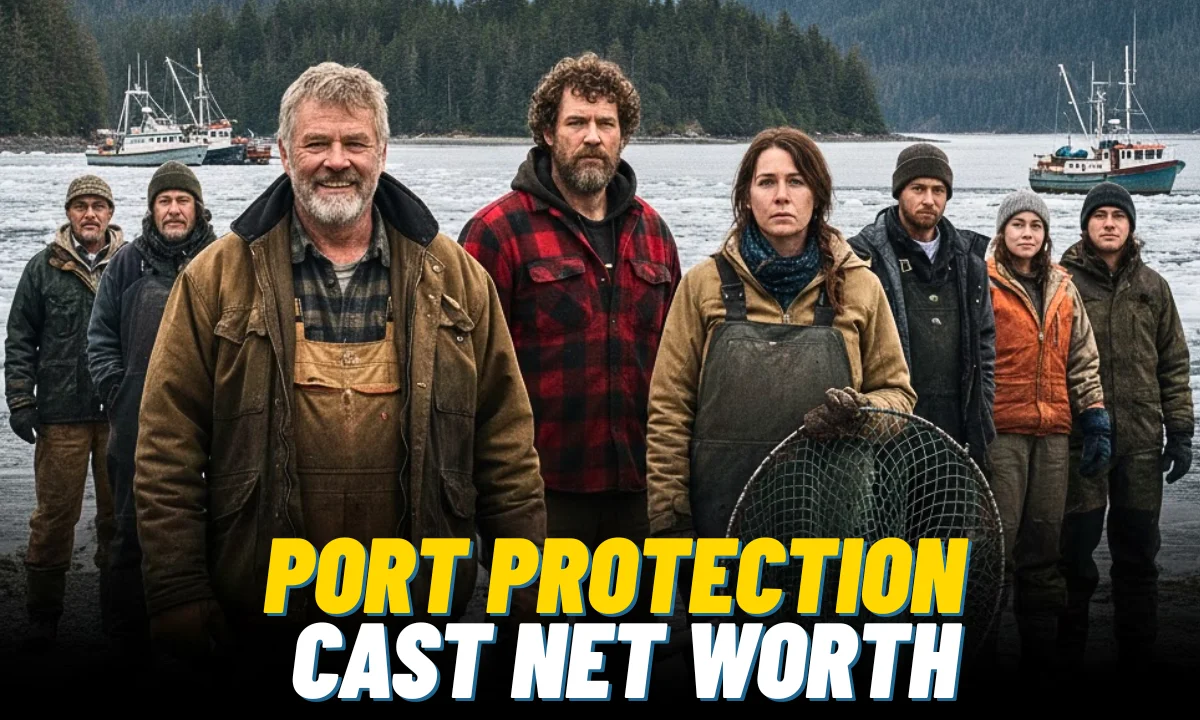
The Port Protection cast has become one of the most fascinating groups of reality TV personalities, not because of luxury lifestyles or Hollywood earnings, but because they live in one of the most remote corners of Southeast Alaska, on Prince of Wales Island, where survival skills matter far more than dollars. As fans search for updated Port Protection cast net worth 2025 estimates, curiosity continues to grow—especially as the show’s popularity expands across National Geographic Channel, YouTube, and outdoor entertainment platforms.
Unlike traditional reality TV stars or even the Life Below Zero cast—such as Sue Aikens, Chip Hailstone, Agnes Hailstone, Glenn Villeneuve, Andy Bassich, Kate Bassich, Jessie Holmes, and Erik Salitan—the Port Protection residents operate within a subsistence economic model, where hunting, fishing, and off-grid living replace conventional income sources.
Understanding their wealth means going beyond cash numbers and looking at resourcefulness, self-sufficiency, reduced household expenses, and survival-based financial strategies. The cast’s wealth lies not only in cumulative earnings, TV show income, and revenue streams, but also in non-cash economic benefits—from catching halibut, lingcod, coho salmon, and king salmon to repairing boats, maintaining smokehouses, and eliminating food costs through local harvesting.
In this deep-dive financial background analysis, we break down net worth estimates, reality TV earnings, long-term show income, per-episode salary expectations, subsistence savings, and how off-grid living influences overall financial stability. We’ll also look at the individual journeys of cast members like Gary Muehlberger, Sam Carlson, Mary Miller, Litzi Botello, Timothy “Curly” Leach, and even historical figures such as Wooden Wheel Johnson who helped shape Port Protection’s identity long before its rise to TV fame.
Introduction to the Port Protection Cast’s Net Worth
The Port Protection cast lives a life far removed from the glitz and glamour of urban reality TV, yet fans remain curious about their financial standing. Unlike shows centered on luxury or city living, the Port Protection TV series highlights off-grid lifestyle, subsistence living, and resourcefulness, which significantly influences their net worth and earnings.
Estimating Port Protection cast net worth 2025 involves more than tallying cast salaries, TV show income, or per-episode salary ($4,500 estimated). Many of the cast’s income sources come from subsistence activities—fishing for halibut, coho salmon, lingcod, and king salmon, small-scale Alaska tourism, guide services like Bushwhack Alaska, and community trade. These activities reduce household expenses and create a self-sufficient lifestyle economy that traditional net worth calculations often overlook.
Fans familiar with the Life Below Zero cast—like Sue Aikens, Chip Hailstone, and Agnes Hailstone—can draw parallels in how remote Alaska communities generate wealth without relying solely on cash. In Port Protection, wealth accumulation is a blend of TV earnings, local economic engagement, and survival-based resourcefulness, offering a unique case study in long-term financial resilience.
This article will explore revenue streams, net worth estimation, and financial background analysis for each cast member, giving a complete picture of how subsistence strategies intersect with reality TV fame.
How Reality TV Stars Build Their Net Worth
Reality TV stars, including those on Port Protection, generate wealth through multiple channels, but the model differs significantly between off-grid Alaska stars and urban-based shows. Typically, reality TV income comes from cast salaries, TV show income, per-episode payments, sponsored content, and social media presence. For example, Port Protection cast members may earn a per-episode salary ($4,500 estimated), while long-term show earnings and exposure contribute to cumulative earnings.
However, unlike mainstream reality stars, the Port Protection cast supplements traditional revenue streams with a subsistence economic model. Income comes from hunting, fishing, local tourism, guide and outfitting business income, survival training workshops, and Alaska mushing schools. This non-traditional financial model reduces reliance on cash, increases self-sufficiency, and helps manage household expenses in one of the most remote corners of Southeast Alaska.
The cast’s net worth is also influenced by show popularity. More exposure on platforms like National Geographic, YouTube, and outdoor entertainment industry events can create additional income streams and long-term financial resilience. Essentially, building net worth for the Port Protection cast is a hybrid strategy: TV earnings plus off-grid lifestyle savings, which demonstrates how remote living economy and survival skills directly impact financial stability.
Key Factors Affecting the Port Protection Cast’s Net Worth
Several unique factors shape the Port Protection cast net worth 2025, reflecting both their reality TV involvement and their off-grid, subsistence lifestyle. Unlike conventional reality stars, whose wealth often comes solely from cast compensation, TV show income, and social media sponsorships, the Port Protection crew blends financial earnings with resource-based living.
1. Lifestyle Differences: Living in Port Protection, Alaska, on Prince of Wales Island, requires self-sufficiency, minimalist living, and traditional survival skills. Hunting, fishing, and seasonal migration reduce reliance on cash and lower household expenses, creating an alternative path to financial stability.
2. Limited Commercial Opportunities: Remote communities have fewer outdoor industry events, tourism opportunities, or sponsored content deals. This naturally caps reality TV earnings, unlike urban reality stars who can monetize every appearance.
3. Show Popularity Influence: The Port Protection TV series continues to grow on National Geographic Channel, YouTube, and documentary survival series platforms. Increased visibility enhances potential revenue streams, whether from additional episodes, spin-offs, or fan-driven income like merchandise and guided tours.
4. Subsistence Economic Model: Many cast members, including Gary Muehlberger, Sam Carlson, Mary Miller, Litzi Botello, and Timothy “Curly” Leach, rely heavily on hunting and fishing. This contributes not only to food security but also to reduced living costs, effectively increasing net worth without additional cash.
5. Long-Term Financial Resilience: The combination of reality TV income, local economic engagement, and survival-based financial strategy creates a sustainable financial model. While the dollar figures may be modest compared to urban reality stars, the quality of life and long-term stability often surpass conventional measures.
These factors collectively explain why estimating net worth for the Port Protection cast is more nuanced than simple revenue tracking—it requires understanding the interplay of subsistence living, survival skills, and media earnings.
Estimated Port Protection Cast Net Worth in 2025
Estimating the Port Protection cast net worth 2025 requires combining TV earnings, local economic activity, and the financial impact of subsistence living. While exact figures are not publicly disclosed, analysts use reality TV income structures, per-episode salary estimates, and long-term show earnings to create realistic approximations.
1. TV Income & Cast Salaries: Each cast member likely earns around $4,500 per episode, depending on episode counts, show popularity, and contractual arrangements. Over multiple seasons, this translates into cumulative earnings that form the foundation of their financial stability.
2. Subsistence & Off-Grid Savings: By relying on hunting, fishing, and local trade, cast members drastically reduce household expenses. For instance, catching halibut, coho salmon, lingcod, and king salmon not only ensures food security but eliminates the need for costly grocery purchases in Southeast Alaska.
3. Local & Tourism-Based Income: Some members supplement earnings through guide services like Bushwhack Alaska, wilderness survival workshops, fishing tourism, and mushing schools. These revenue streams enhance overall wealth without relying solely on cash income.
4. Non-Traditional Wealth Accumulation: Unlike urban reality stars, who accumulate wealth primarily in cash and assets, Port Protection cast members build financial resilience through subsistence strategies, barter, and off-grid self-sufficiency. This contributes to a long-term, sustainable net worth, even if dollar figures appear modest.
Overall, the combination of TV show income, local economic activities, and reduced living costs creates a net worth that reflects both financial earnings and off-grid survival value.
Individual Net Worth of Port Protection Cast Members (2025 Estimates)
Below is a breakdown of estimated net worth for each Port Protection cast member, combining reality TV earnings, local income sources, and savings from subsistence living. These figures reflect both financial and non-cash wealth accumulation.
Gary Muehlberger
Gary is one of the most experienced cast members, known for his mechanical skills, boat repair expertise, and hunting abilities. His estimated net worth combines per-episode salary, cumulative show earnings, and value derived from subsistence living, placing him in the range of $120,000–$150,000. His off-grid lifestyle contributes significantly to reduced household expenses and long-term financial resilience.
Sam Carlson
Sam’s wealth stems from TV income, local guide work, and fishing-based income, particularly in Prince of Wales Island waters. His subsistence lifestyle and skill in harvesting coho and king salmon enhance his financial stability, with estimated net worth around $100,000–$130,000.
Mary Miller
Mary’s approach blends TV show compensation, Alaska tourism engagement, and traditional homesteading skills. By eliminating food costs through hunting and fishing, she sustains a self-sufficient lifestyle economy, contributing to an estimated net worth of $90,000–$120,000.
Timothy “Curly” Leach
Curly’s experience in mechanical work, boat repair, and survival skills supports both income generation and cost reduction. With revenue streams from TV earnings and subsistence living, his estimated net worth ranges between $95,000–$125,000.
Litzi Botello
Litzi leverages reality TV exposure, Alaska guide services, and off-grid skill mastery to maintain financial stability. Her minimalist living and hunting/fishing expertise reduce expenses, giving her an estimated net worth of $85,000–$115,000.
These individual net worth estimates illustrate how the Port Protection cast blends conventional reality TV earnings with survival-based financial strategies, a unique subsistence economic model rarely seen in other reality TV series like Life Below Zero.
Historical Financial Background of the Cast
Understanding the Port Protection cast net worth 2025 requires looking at their financial history and lifestyle before joining the show. Unlike mainstream reality TV stars who often start with urban assets or prior media exposure, many Port Protection cast members came from subsistence-focused, off-grid communities, relying on traditional survival skills, hunting, fishing, and self-sufficiency.
1. Pre-Show Income Sources: Before the series, individuals like Gary Muehlberger, Sam Carlson, and Timothy “Curly” Leach earned income through mechanical work, local guide services, Alaska fishing tourism, and homesteading activities. These subsistence-based earnings reduced reliance on cash, helping them accumulate non-traditional wealth.
2. Early Lifestyle Impact on Wealth: Living in Port Protection, Alaska, meant navigating wilderness challenges, seasonal migrations, and food procurement through hunting and fishing. Such practices significantly lowered household expenses, creating a form of long-term financial resilience rarely captured in standard net worth calculations.
3. Comparison with Similar Shows: Unlike the Life Below Zero cast, where some members like Sue Aikens or Chip Hailstone had prior business ventures or equipment investments, Port Protection cast members’ wealth largely stems from practical skills and resourcefulness rather than cash assets.
4. Historical Value of Skills: Beyond dollars, mastery in hunting king salmon, catching halibut, repairing boats, and running local survival workshops functioned as a form of wealth accumulation, creating a non-cash economic model that continues to supplement TV earnings.
By combining pre-show experience, off-grid living, and TV income, the cast built a unique financial foundation that underpins their net worth in 2025, emphasizing subsistence strategy for wealth.
Impact of Port Protection’s Success on Cast Earnings
The success of the Port Protection TV series has significantly influenced the financial landscape of its cast members. Unlike traditional reality TV, where wealth often comes primarily from salaries and sponsorships, the Port Protection cast benefits from a combination of media exposure, fan interest, and supplementary income opportunities.
1. Increased Media Exposure: With the show airing on National Geographic Channel and streaming on YouTube, cast members such as Gary Muehlberger, Sam Carlson, and Litzi Botello have gained visibility beyond Southeast Alaska. This exposure not only increases per-episode income but also opens doors for sponsored content, merchandise, and appearances at outdoor industry events.
2. Long-Running Series Influence: Being part of a long-running reality series amplifies the potential for cumulative earnings. Cast members’ financial stability is enhanced by recurring contracts, extended seasons, and the show’s popularity, which allows for better negotiation of cast salaries and revenue streams.
3. Expanded Revenue Opportunities: Success has allowed cast members to leverage their skills into guide services, wilderness survival workshops, and Alaska tourism ventures. For example, the Bushwhack Alaska guide service and survival training schools benefit from fan curiosity and recognition of the cast.
4. Financial Visibility vs. Non-Cash Wealth: While the show brings in traditional income, it also increases awareness of the subsistence and off-grid lifestyle. By highlighting self-sufficiency, hunting and fishing, and resourcefulness, the series indirectly showcases non-cash wealth that reduces living expenses and enhances net worth.
Overall, the Port Protection series’ success has transformed the cast’s financial trajectory, blending TV show income with subsistence and skill-based wealth, a model rarely seen in other reality TV series.
Earnings vs. Subsistence Living: Understanding Their Financial Philosophy
The Port Protection cast demonstrates a unique financial philosophy where income and lifestyle are deeply intertwined. Unlike urban reality TV stars, who often equate net worth with cash assets and luxury possessions, Port Protection cast members prioritize subsistence living, self-sufficiency, and resourcefulness, which directly impacts their overall financial stability.
1. Subsistence Living as Wealth: By relying on hunting, fishing, and seasonal harvesting of halibut, king salmon, coho salmon, lingcod, and yelloweye rockfish, the cast eliminates significant food costs, effectively increasing disposable income. This approach exemplifies a non-traditional financial model where reduced expenses contribute as much to net worth as cash earnings.
2. Off-Grid Lifestyle and Reduced Expenses: Minimalist living, mechanical repairs, boat maintenance, and community interdependence allow cast members to cut back on standard living expenses. For example, repairing boats or smokehouses themselves reduces reliance on commercial services, further strengthening financial resilience.
3. TV Income in Context: While reality TV earnings, per-episode salary, and long-term show income provide essential financial support, they are supplemented and often overshadowed by the subsistence economic model. The cast’s financial philosophy emphasizes quality of life, survival skills, and sustainable wealth over simple cash accumulation.
4. Skill-Based Wealth: Mastery in traditional survival skills, Alaska homesteading, and wilderness challenges translates to tangible wealth by securing food, shelter, and self-reliance, which conventional net worth estimates rarely capture.
In essence, the Port Protection cast’s financial philosophy blends reality TV income with subsistence strategies, creating a sustainable and long-term wealth model that balances financial stability with survival-based self-sufficiency.
How Much Does the Port Protection Cast Make Annually?
Determining the annual earnings of the Port Protection cast requires considering both reality TV income and subsistence-based savings. Unlike high-profile urban reality stars, much of the cast’s financial stability comes from a blend of cash income and off-grid lifestyle benefits.
1. TV Show Income: The Port Protection TV series pays cast members an estimated $4,500 per episode, with seasonal totals depending on episode counts. Over multiple seasons, this forms the core of cumulative earnings and contributes to each member’s financial background analysis.
2. Supplemental Revenue Streams: Many cast members supplement their income through guide services, Alaska tourism, wilderness survival workshops, and fishing-based income. These local revenue streams are essential, as remote community economic models often provide more opportunities for survival-based wealth than cash-based wealth.
3. Cost Savings Through Subsistence Living: By living off the land—hunting king salmon, coho salmon, halibut, lingcod, and yelloweye rockfish—cast members effectively eliminate food costs, reduce household expenses, and create a self-sufficient lifestyle economy. These savings act as a form of non-traditional financial accumulation.
4. Income vs. Living Costs: Even with modest TV salaries, the reduced expenses from subsistence living allow cast members to maintain financial stability, proving that in Port Protection, Alaska, wealth is measured not only in dollars but also in resourcefulness, survival skill mastery, and independence from commercial systems.
Overall, the Port Protection cast’s annual income combines reality TV earnings, local economic activity, and cost-saving strategies, reflecting a long-term financial resilience uncommon in other reality TV franchises.
Ways People Earn Money in Port Protection, Alaska
In Port Protection, Alaska, earning money goes beyond traditional employment. The cast members and local residents rely on a combination of reality TV income, subsistence activities, and small-scale economic ventures to sustain their off-grid lifestyles.
1. Reality TV Earnings: The Port Protection TV series provides a reliable income stream. With cast salaries, per-episode payments, and long-term show earnings, members like Gary Muehlberger, Mary Miller, and Timothy “Curly” Leach supplement their income while gaining exposure on National Geographic Channel and YouTube.
2. Fishing-Based Income: The surrounding waters of Southeast Alaska and Prince of Wales Island offer opportunities for commercial fishing, guided fishing tours, and Alaska fishing tourism. Catching species like halibut, coho salmon, king salmon, lingcod, and yelloweye rockfish allows residents to sell their catch or trade within the subsistence economy, adding a valuable revenue stream.
3. Guide and Survival Services: Many cast members run wilderness survival workshops, mushing schools, or outdoor guiding businesses. Services such as Bushwhack Alaska leverage their survival expertise and off-grid skills to generate income while educating visitors on Alaska homesteading and traditional survival skills.
4. Subsistence and Barter Economy: Even without cash, residents benefit from reduced living costs through hunting, fishing, and mechanical work, which effectively acts as a financial resource. Skills in boat repair, food preservation, and seasonal harvesting directly contribute to long-term financial resilience.
5. Tourism and Community Events: Local events and outdoor industry gatherings allow cast members to monetize their experience and reputation, further diversifying income sources in a remote community where conventional jobs are limited.
By blending TV income, guide services, subsistence savings, and tourism ventures, the Port Protection cast and locals maintain a self-sufficient financial ecosystem that highlights the unique interplay between reality TV earnings and off-grid living.
Port Protection Net Worth vs. Urban Reality TV Stars
Comparing the Port Protection cast net worth 2025 with urban reality TV stars highlights a stark contrast in income structure, lifestyle, and financial strategy. While shows set in cities focus on luxury, endorsements, and large cash payouts, Port Protection cast members operate in a subsistence-based economy where self-sufficiency and survival skills often replace monetary wealth.
1. Salary and TV Income Differences: Urban reality stars often earn high per-episode salaries, sponsorship deals, and social media revenue, whereas Port Protection cast members rely on per-episode payments (around $4,500), long-term show earnings, and cumulative income. Their TV income is modest but supplemented by non-traditional revenue streams.
2. Cost of Living Considerations: In remote Alaska, the cost of living is offset by subsistence living. Hunting, fishing, and food security through off-grid practices reduce expenses significantly. Urban stars, despite higher salaries, face continuous high living costs, rent, and lifestyle spending, which can erode perceived wealth.
3. Non-Cash Wealth Accumulation: Port Protection cast members gain value from self-sufficiency, mechanical skills, boat repair, and traditional survival expertise. These non-cash economic benefits form part of their net worth in a way that urban wealth calculations often overlook.
4. Long-Term Financial Resilience: While urban stars may accumulate high short-term wealth, the Port Protection cast develops long-term financial stability through subsistence strategy for wealth, reduced expenses, and diversified local revenue streams.
In summary, while urban reality TV stars may have larger nominal net worth, the Port Protection cast demonstrates a more sustainable and self-reliant financial model, balancing TV earnings with off-grid living, survival skills, and resourcefulness.
Frequently Asked Questions
How much do Port Protection cast members earn?
Each cast member is estimated to earn around $4,500 per episode, with cumulative earnings increasing over multiple seasons. Additional income comes from subsistence living, guide services, fishing tourism, and survival workshops, making their financial stability a combination of TV income and off-grid savings.
What happened to Gary Muehlberger?
Gary Muehlberger remains a fan favorite for his mechanical skills, hunting expertise, and survival knowledge. His contributions to the show and subsistence-based lifestyle continue to play a significant role in both his financial and non-cash wealth accumulation.
Did Amanda Makar leave the show?
Yes, Amanda Makar departed from the series to pursue other Alaska-based ventures and off-grid opportunities, demonstrating the flexibility and personal choice inherent in remote community economic models.
Did Troy sell his house on Port Protection?
Some cast members, like Troy, have made changes to their property holdings, often reflecting financial decisions influenced by off-grid living costs and subsistence strategy rather than traditional real estate profit motives.
What is the Kilcher family’s net worth?
While the Kilcher family gained fame through Alaska homesteading and survival expertise, their wealth reflects a mix of TV show income, self-sufficiency, and traditional survival skills, similar to the Port Protection cast, though their historical exposure via the Life Below Zero cast and other media platforms adds additional financial visibility.
Final Thoughts
The Port Protection cast net worth 2025 offers a fascinating insight into a financial model that blends reality TV income with off-grid, subsistence living. Unlike typical reality TV stars, the cast of Port Protection demonstrates that wealth is not solely measured in dollars but also in self-sufficiency, resourcefulness, and survival skill mastery.
By combining TV earnings, guide services, fishing-based income, and reduced living costs through hunting and fishing, members like Gary Muehlberger, Sam Carlson, Mary Miller, Litzi Botello, and Timothy “Curly” Leach maintain a financially resilient and sustainable lifestyle. The show’s popularity on National Geographic Channel, YouTube, and outdoor entertainment platforms has enhanced cumulative earnings, while subsistence strategies continue to provide non-cash wealth and long-term financial stability.
Ultimately, the Port Protection cast exemplifies how remote community economic models, survival-based financial strategies, and off-grid living can create a unique form of wealth—one where quality of life, independence, and practical skills hold as much value as cash. For fans and analysts alike, their journey offers a compelling lesson in how lifestyle choices shape financial resilience in one of the most challenging environments in the world: Southeast Alaska’s Prince of Wales Island.
Anne Kellogg is the creative mind behind NamesPerl, where she shares her passion for names. With 4 years of experience in crafting unique and catchy names, Anne helps readers discover the perfect words to express identity, creativity, and meaning.