

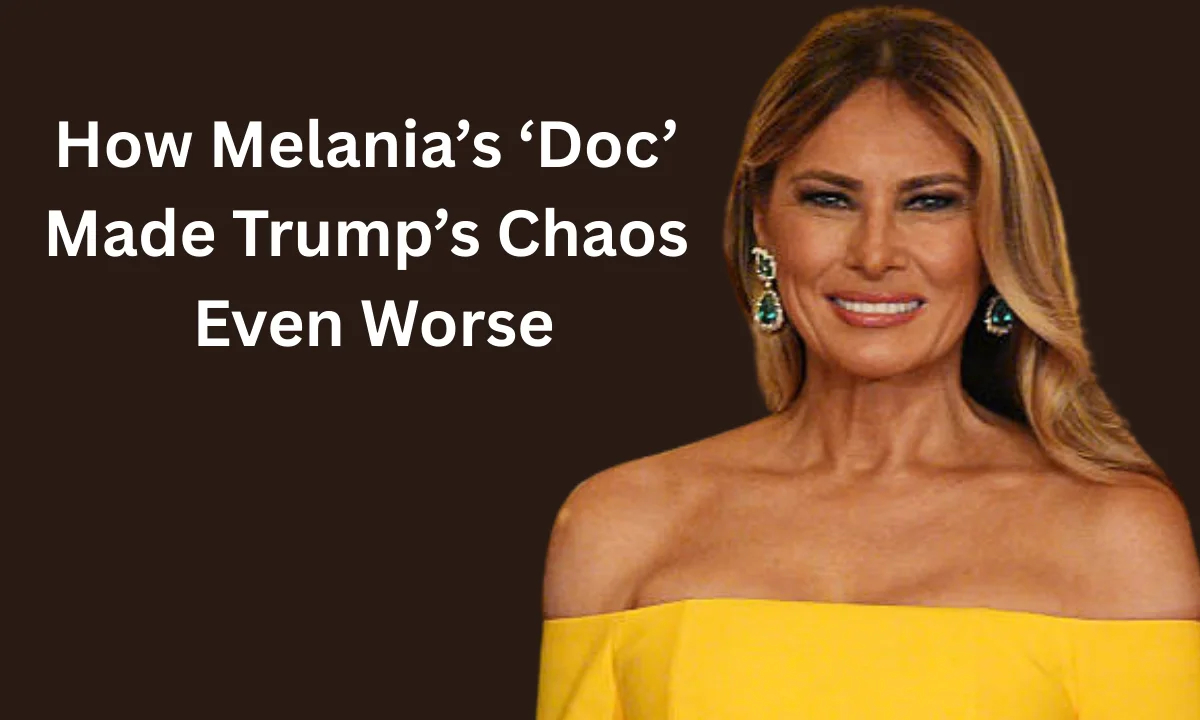
This week was supposed to be Melania’s Week—a celebration of the First Lady, highlighted by the premiere of Melania: The Movie. In the White House, plans were carefully discussed and orchestrated to give her this moment. Yet, the nation’s attention was elsewhere, dominated by a spiraling crisis in Minneapolis that overshadowed her big week.
According to sources, the infighting inside the White House was intense. Blame was being thrown across factions. The “Siouxsie Wiles faction,” known for her steady, moderate Republican approach, found itself at odds with hardliners like Stephen Miller and allies such as Kristi Noem. Each group pointed fingers: Miller blamed Noem, Noem blamed Miller, and Wiles attempted to keep the chaos in check.
The tension came to a head as Minneapolis shootings escalated, drawing national attention and pushing Melania’s milestone events into the background. The first screening of Melania documentary on Saturday was overshadowed by the controversy. The Thursday premiere at the Kennedy Center, a moment intended to honor her, now risked being just another footnote in the White House drama.
The Power of a Pissed-Off First Lady
The president, it seems, is often moved less by political strategy than by his wife’s displeasure. Melania, described repeatedly as “the country’s most famous immigrant,” has historically influenced key decisions. During the first administration, her intervention famously reversed the family separation policy at the border—a reminder to White House staff of the consequences of alienating her.
Saturday’s events, stretching into Sunday and Monday, demonstrated this dynamic once again. Sources say Trump began “wobbling” on his policy response to the Minneapolis crisis, a shift triggered less by political calculation and more by Melania’s growing frustration.
Factionalism and Blame
Inside the White House, loyalty and blame are constantly in play. Kristi Noem and Stephen Miller, who had aligned on policy, found themselves in mutual recrimination as the Minneapolis situation worsened. Officials suggest Noem’s execution of Miller’s policy was being criticized, while Miller’s stringent quotas left Noem in an impossible position.
Meanwhile, Corey Lewandowski, advisor to Noem and rumored to be romantically involved with her, added another layer of complexity. Lewandowski has a long-standing relationship with Trump, built on loyalty and decades of involvement in his campaigns. Though controversial, he remains influential, further complicating the White House power dynamics.
Tom Homan, former ICE official under scrutiny in prior investigations, has now been dispatched to Minneapolis to stabilize operations, reporting directly to the president, highlighting how central loyalty and reputation are to decision-making in this administration.
Minneapolis and the MAGA Backlash
The Minneapolis shootings, and the government’s handling of ICE operations there, quickly became a political flashpoint. Two unarmed individuals were killed, sparking public outrage and highlighting contradictions in enforcement policies. MAGA supporters, meanwhile, rallied around ICE agents, stoking tensions further.
Analysts note that policy quotas drove operational failures, creating a scenario where untrained or underprepared agents were forced into difficult situations. The crisis revealed the gaps between policy intent, execution, and public perception—and how these gaps are often politicized within the White House.
Democratic Response and Public Outcry
While the administration struggled internally, Democratic leaders offered weak responses. Chuck Schumer called for action, but backbone was lacking among lawmakers. Observers highlighted the contrast with past leaders: both Barack Obama and Bill Clinton eventually spoke out, though only after multiple deaths, underscoring the weight of moral authority in such crises.
The Irony of Trump’s Loyalty Dilemma
Despite the chaos, the administration remains remarkably resistant to internal accountability. Trump, who famously built his reputation on firing disloyal staff, now faces a team of abjectly loyal aides, making it difficult to remove anyone—even amid policy failures. Loyalty, rather than competence, dictates survival in this environment, creating a paradox where poor execution meets unwavering allegiance.
Melania’s Moment Amid Chaos
Throughout the turmoil, Melania’s week and Melania Trump documentary’s premiere remain central to her personal and public narrative. While Bezos and other high-profile figures have invested in the film, the public and political distractions threaten to steal the spotlight.
Observers suggest Trump’s response is guided less by politics than by managing a potentially “uncontrolled and angry” Melania, underscoring the unique personal dynamics that shape policy and perception in this administration.
Looking Ahead
As the White House navigates factionalism, Minneapolis fallout, and Melania’s high-profile events, one question looms: who will ultimately bear the blame? Stephen Miller’s hardline policies, Kristi Noem’s execution, and Corey Lewandowski’s influence all intersect, creating a tense mix of loyalty, ambition, and miscalculation.
Meanwhile, Melania prepares for her premiere, the country watches Minneapolis, and the president continues his singular pursuit of power—undaunted by both crisis and criticism.
The White House remains a theater of loyalty, blame, and personal influence, with Melania’s week serving as a reminder of the personal dimensions behind public policy.
Conclusion
The events of Melania’s Week reveal much more than a movie premiere—it exposes the inner workings, rivalries, and factionalism of the Trump White House. While the First Lady hoped for a moment in the spotlight, external crises, particularly the Minneapolis ICE debacle, diverted attention and highlighted the tangled web of blame, loyalty, and influence among key players like Stephen Miller, Kristi Noem, and Corey Lewandowski.
At the center of it all is Donald Trump, whose decisions are often shaped less by political norms and more by personal loyalties and reactions—most notably to a dissatisfied Melania. Amidst the chaos, Tom Homan’s deployment to Minneapolis illustrates the administration’s reactive approach, while public outrage and moral voices from figures like Obama and Clinton underscore the wider consequences of policy missteps.
Ultimately, Melania’s Week underscores the complexity of power in the White House: personal influence, bureaucratic maneuvering, and political spectacle all collide, leaving questions about accountability, leadership, and the enduring impact of internal conflicts.
FAQs
What happened during Melania’s Week?
Melania’s Week was meant to celebrate the First Lady, highlighted by the premiere of Melania: The Movie. However, the events were overshadowed by a crisis in Minneapolis involving ICE operations and public outrage over shootings, drawing national attention away from her milestone events.
Why was the White House in turmoil?
The White House was experiencing intense factionalism, with different groups blaming each other for policy failures. The moderate “Siouxsie Wiles faction” clashed with hardliners like Stephen Miller and allies such as Kristi Noem, creating a chaotic environment where loyalty often mattered more than competence.
Who is being blamed for the Minneapolis crisis?
Stephen Miller, responsible for policy quotas, and Kristi Noem, executing the policies, were both targets of blame. Corey Lewandowski, advisor to Noem, also plays a role due to his influence. Meanwhile, Tom Homan was sent to Minneapolis to stabilize the situation, reporting directly to President Trump.
How does Melania influence policy decisions?
Historically, Melania has influenced major decisions, such as reversing the family separation policy during the first Trump administration. Sources suggest that her dissatisfaction can significantly impact the president’s choices, highlighting the personal dimension behind political actions.
What is Stephen Miller’s role in the current administration?
Stephen Miller drives hardline immigration policies, enforcing quotas for ICE operations. His strategies are controversial and have been central to the Minneapolis crisis, but his loyalty and alignment with Trump have insulated him from immediate consequences.
How did Democrats respond to the Minneapolis shootings?
Democratic leaders, including Barack Obama and Bill Clinton, eventually spoke out after multiple deaths, emphasizing moral authority. Current congressional responses, however, were largely seen as weak, with calls for action like potential government shutdowns failing to gain full support.
What is Corey Lewandowski’s influence in the White House?
Corey Lewandowski, advisor to Kristi Noem and rumored to be romantically involved with her, wields influence due to his long-standing relationship with Trump. His presence bolsters Noem’s position, but also adds to the complexity and factional tensions within the administration.
Will anyone face consequences for the policy failures?
Sources suggest that despite the severity of the Minneapolis crisis, immediate consequences for key figures are unlikely. The administration is populated with loyal aides, making it difficult to remove anyone for failures, and shifting blame is a recurring strategy in the White House.
Why is the public outraged over the Minneapolis situation?
Two unarmed individuals were killed, and enforcement agents acting under strict quotas contributed to operational failures. Public outrage is fueled by the perception that the government is failing to protect citizens and then attempting to obscure the reality of events.
How does Melania’s movie fit into the broader White House narrative?
Melania: The Movie is intended as a statement of her role and influence. While the documentary represents a personal milestone, external crises and political chaos have overshadowed the premiere, reflecting how personal and political spheres intersect in the Trump White House.
Anne Kellogg is the creative mind behind NamesPerl, where she shares her passion for names. With 4 years of experience in crafting unique and catchy names, Anne helps readers discover the perfect words to express identity, creativity, and meaning.