

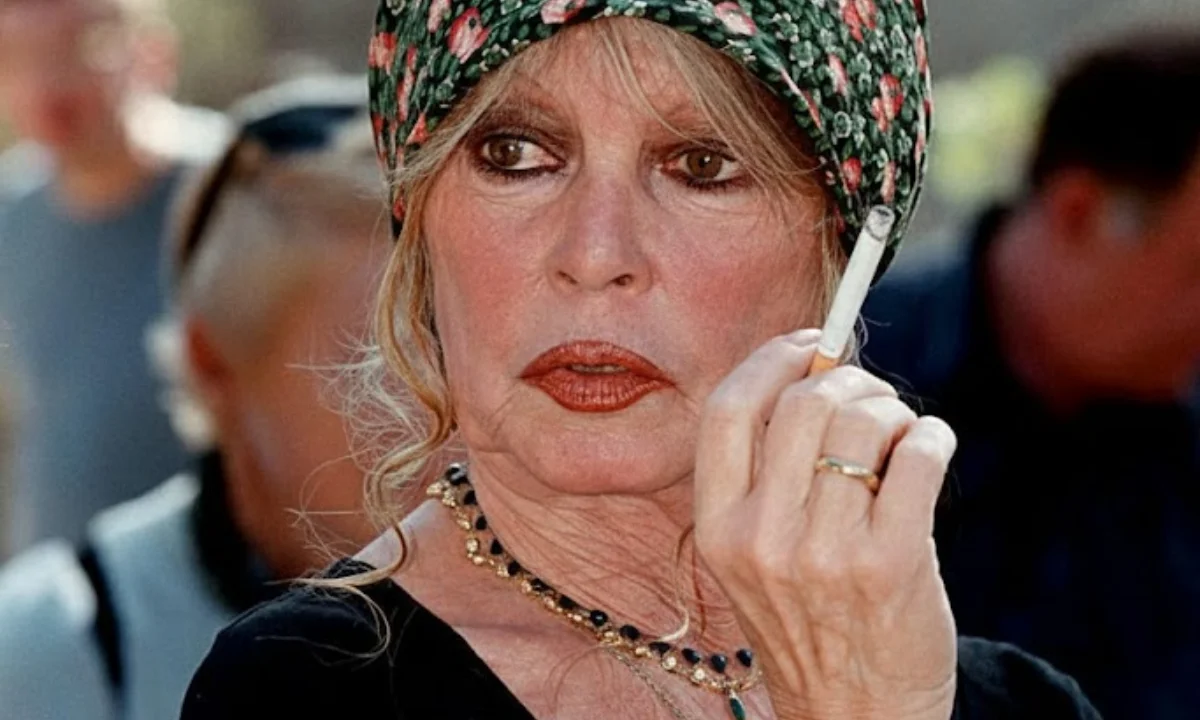
Brigitte Bardot, who died on December 28, 2025, at the age of 91, remains one of the most complex figures in French history. While she was once the world’s premier “sex symbol” and a “cultural earthquake” who redefined femininity and freedom in the 1950s and 60s, her later life was marked by a deep and often bitter polarization of public opinion. The woman who served as the official model for Marianne, the symbol of the French Republic, eventually became a figure frequently appearing in court for inciting racial and religious hatred.
The Radical Shift: From Cinema to Far-Right Politics
The foundation of Bardot’s controversy lies in her dramatic political transformation. After retiring from cinema at the peak of her fame in 1973 to devote herself to animal rights, she gradually moved toward the fringes of French politics. Her alignment with the far-right National Front (now National Rally) was a primary driver of public friction.
This political shift was significantly influenced by her personal life. In 1992, she married her fourth husband, Bernard d’Ormale, who had served as an adviser to Jean-Marie Le Pen, the founder of the National Front. Bardot did not shy away from these associations, describing the elder Le Pen as a “lovely, intelligent man”. She later became a staunch supporter of his daughter, Marine Le Pen, whom she endorsed in multiple presidential elections and famously dubbed the “Joan of Arc of the 21st century”. To many fans who remembered her as a pioneer of sexual liberation, this embrace of ultra-conservative nationalism felt like a betrayal of the freedom she once embodied.
A Record of Hate Speech: Six Legal Convictions
Perhaps the most documented aspect of Bardot’s controversial later years is her history of legal troubles regarding her public statements. Between 1997 and 2021, Bardot was convicted six times by French courts for inciting racial and religious hatred. These convictions were primarily rooted in her vitriolic commentary on:
- Islam and Immigration: Bardot frequently targeted France’s Muslim community. In her 1999 book Le Carré de Pluton, she claimed France was being “invaded by an overpopulation of foreigners, especially Muslims”. In 2008, she was fined €15,000 for stating she was “fed up with being under the thumb of this population which is destroying us”. Much of her anger was directed at ritual slaughter, specifically the practice of killing sheep during religious festivals without prior stunning, which she attacked in an “extremist tone”.
- The Inhabitants of Réunion: In 2019, Bardot sent an open letter to the prefect of the French territory Réunion, calling the residents “autochtones who have kept the genes of savages” and referring to them as “degenerate”. This resulted in her largest fine to date: €20,000 in 2021.
Social Friction: Homophobia and Anti-Feminism
Bardot’s controversies extended beyond race and religion into broader social issues. In her 2003 book, Un cri dans le silence (A Cry in the Silence), she sparked outrage by attacking the LGBTQ+ community. She used derogatory terms to describe gay people, referring to them as “fairground freaks”.
Furthermore, she alienated modern social movements by dismissing the #MeToo movement. In a 2018 interview, she described actresses who complained of sexual harassment as “hypocritical” and “ridiculous,” suggesting that many flirted with producers to get roles before claiming harassment later. She even went as far as to say she found it “charming” when men complimented her “nice little ass,” a stance that placed her in direct opposition to contemporary feminist discourse.
Personal Scandals and Motherhood
The controversy was not limited to her public politics; it permeated her private life and her role as a mother. Bardot had a famously strained relationship with her only child, Nicolas-Jacques Charrier, born in 1960. In her memoirs, she admitted she never wanted to be a mother and sought an illegal abortion. She described her pregnancy as a “cancerous tumor” and stated that she would have “preferred to give birth to a little dog”.
These remarks led to a successful lawsuit by Charrier and his father for emotional distress and “hurtful remarks,” with a court ordering Bardot to pay significant damages. While she claimed in later years that she had made amends with Nicolas, the public nature of her maternal rejection remained a dark spot on her legacy for decades.
The Militant Nature of Her Activism
Even her animal rights work—which earned her immense respect and awards from UNESCO and PETA—could be controversial in its methods. Bardot was described as a “militant” activist. She was known for launching aggressive, high-profile campaigns that often crossed into personal attacks, such as calling hunters “sub-men” and “drunkards”. She used her fame to lobby world leaders with intense language, once writing to the Queen of Denmark to condemn dolphin killing as a “macabre spectacle”.
A Polarized Legacy
In her final years, Bardot lived in “silent solitude” at her Saint-Tropez home, “La Madrague,” largely retreating from humanity but continuing to fire barbs at what she saw as a “dull, submissive” France. Upon her death, she was hailed as a “legend of the century” by President Emmanuel Macron, yet many obituaries were forced to grapple with the “complicated legacy” of a woman who was a pioneer on screen and a polarizing provocateur off-screen.
Analogy for Understanding
Brigitte Bardot’s life can be compared to a classic, beautiful marble statue that has been weathered by acid rain. While the original form represents a timeless ideal of beauty and freedom that the world continues to admire, the surface has become etched with deep, jagged scars of controversy and prejudice that make it impossible to view the work of art without seeing the damage caused by the storms of her later years.
FAQs
Why was Brigitte Bardot controversial later in life?
Her support for far-right politics, repeated hate-speech convictions, and inflammatory public statements fueled lasting controversy.
How many times was Brigitte Bardot convicted in court?
She was convicted six times by French courts between 1997 and 2021 for inciting racial or religious hatred.
What were Brigitte Bardot’s views on Islam and immigration?
She made harsh statements against Islam and immigration, particularly criticizing Muslim communities and ritual slaughter.
Did Brigitte Bardot support the National Front?
Yes, she openly supported the National Front and later endorsed Marine Le Pen in multiple elections.
Was Brigitte Bardot involved in animal rights activism?
Yes, after retiring from film, she became a prominent and militant animal rights activist.
How did Brigitte Bardot respond to the #MeToo movement?
She dismissed it, criticizing actresses who spoke out and opposing modern feminist narratives.
What impact did her personal life have on her legacy
Her strained relationship with her son and public remarks about motherhood added to the complexity of her public image.
How is Brigitte Bardot remembered today?
She is remembered as both a cultural icon and a deeply polarizing figure with a complicated legacy.
Anne Kellogg is the creative mind behind NamesPerl, where she shares her passion for names. With 4 years of experience in crafting unique and catchy names, Anne helps readers discover the perfect words to express identity, creativity, and meaning.