

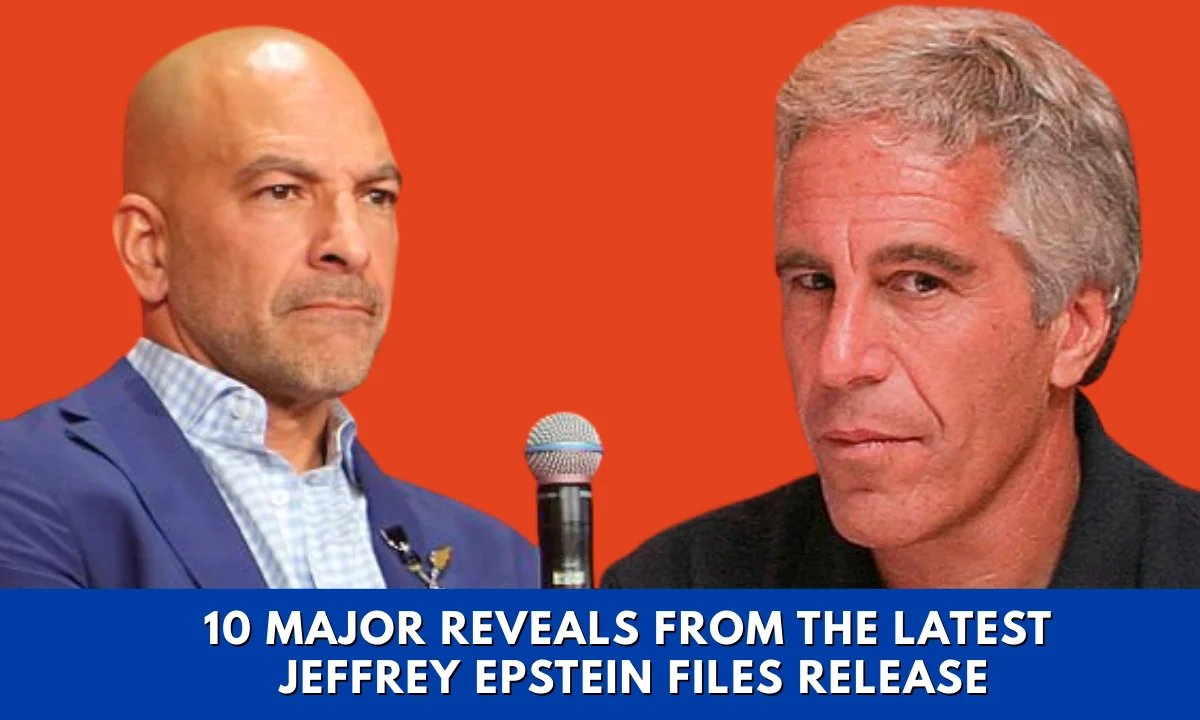
The release of the Epstein files may ultimately be remembered as one of the most consequential document dumps in modern history. Not only because they expose the grotesque and criminal sexual exploitation orchestrated by Jeffrey Epstein, but because they offer something arguably more unsettling: an unfiltered view into how the world’s wealthiest and most powerful people communicate, bond, and build trust when they believe no one is watching.
These files do more than chronicle abuse. They map a hidden social economy—one built on access, secrecy, moral compromise, and mutual protection. Within this massive archive of more than three million documents lies a disturbing truth: Epstein’s true value to global elites was not merely his money or hospitality, but his ability to serve as a gateway to power itself.
To understand the broader implications of the Epstein files, it helps to examine one seemingly small corner of the archive—a relationship that perfectly reflects the dynamics at play throughout the entire trove.
A Case Study in Access: Peter Attia and Jeffrey Epstein
One of the more revealing relationships documented in the Epstein files is between Jeffrey Epstein and Dr. Peter Attia, a physician who would later become a dominant figure in the wellness and longevity space. Attia, now a bestselling author and podcast mainstay, entered Epstein’s orbit around 2014 while raising funds for a $40 million nutrition science initiative.
At the time, Attia was still primarily engaged in medical research. Epstein, with his deep pockets and unmatched network, was a logical—if deeply troubling—potential donor. What began as professional outreach soon evolved into something more revealing: a calculated pursuit of access.
Once Attia established a foothold in Epstein’s world, his requests escalated. Emails show him seeking introductions to some of the most powerful people on Earth, including Bill Gates, Sean Parker, and even the Pope. Epstein, acting as a social broker, was the bridge.
By September 2015, Attia pitched Epstein on a new idea—becoming his personal physician. This marked a turning point. Soon after, Attia openly discussed pivoting away from research and into concierge medicine, a far more lucrative model made possible largely by Epstein’s connections.
The Business of Exclusivity
Epstein’s greatest asset was access to the ultra-elite, and that access paid dividends for Attia. Through Epstein’s network, Attia assembled a private client list reportedly willing to pay between $100,000 and $300,000 per year for personalized medical consultation.
While the identities of these clients remain confidential, circumstantial evidence is telling. Attia’s invitation to Jeff Bezos’s wedding and Bezos’s dramatic physical transformation—aligned with Attia’s outspoken advocacy of testosterone therapy—suggest that his clientele includes the richest and most powerful individuals in the world.
By 2026, Attia claimed to have 75 private patients, a figure that likely translates into annual earnings between $20 million and $40 million. Even so, within Epstein’s universe of billionaires, oligarchs, and heads of state, Attia was still a relative newcomer—useful, ambitious, and eager to please.
Six Hundred Emails and a Culture of Flattery
Between 2014 and 2017, Epstein and Attia exchanged roughly 600 emails. What begins as formal correspondence gradually shifts into familiarity, flattery, and disturbing intimacy. Attia appears consistently deferential, eager to impress, and increasingly fluent in the crude, knowing language that pervades Epstein’s correspondence.
In one email, Attia jokingly responds to a conversation with Epstein by writing, “Pussy is indeed low carb. Still awaiting results on gluten content.” In another, after receiving a now-redacted photograph of Epstein with young women, Attia writes: “The life you lead is so outrageous and yet I can’t tell a soul.”
This language was not anomalous. It mirrors the tone found throughout Epstein’s emails, including the infamous birthday book and sexually explicit exchanges with numerous powerful figures. Such communication functioned as a form of social currency—a signal that one understood the rules of the club.
Epstein’s Real Power: Shared Secrets
Contrary to popular belief, Epstein’s draw was not simply the sex parties themselves. It was the exclusivity of them. Attendance implied complicity, discretion, and trust. Those who crossed that line became part of an inner circle bound by secrets no one could afford to expose.
This dynamic mirrors initiation rituals used by criminal organizations: require moral transgression to ensure loyalty. Once implicated, participants are incentivized to protect one another.
The Epstein files reveal this pattern repeatedly, connecting figures such as Prince Andrew, Bill Gates, Elon Musk, Richard Branson, Donald Trump, Bill Clinton, Ehud Barak, Sergey Brin, Steve Bannon, and others through similar exchanges. Politics, ideology, and public image dissolve behind closed doors. What remains is allegiance to power.
Moral Flexibility as a Professional Asset
This willingness to suspend moral judgment becomes a currency in elite spaces. It is what makes certain people “safe” to do business with. The files suggest that those who could tolerate—or overlook—Epstein’s reputation were rewarded with access and opportunity.
This phenomenon is not unique to Epstein. It reflects a broader truth about elite culture: wealth insulates people from accountability, and exclusivity breeds ethical erosion. Billionaires already have planes, yachts, mansions, and influence. What they crave is what money alone cannot buy—membership in forbidden spaces.
Ironically, exclusivity is also what Peter Attia sells. While he provides free advice through podcasts, books, and social media, his real revenue comes from sponsorships and private clients—services available only to those who can afford extraordinary fees.
Damage Control After the Files Went Public
When Epstein’s emails resurfaced publicly, Attia moved quickly into damage control. In a lengthy statement posted on X, he claimed that his relationship with Epstein was rooted in professional naivety rather than moral awareness.
He argued that his comments about secrecy referred to elite social norms, not knowledge of criminal behavior, and acknowledged that some of his language “reads terribly” in hindsight. The apology was carefully worded and, on the surface, sincere.
Yet one detail remains impossible to ignore: by the time many of these emails were written, Epstein had already been convicted of sex crimes. Association with him was not ignorance—it was a choice.
A Defining Moment: Power Over Parenthood
Perhaps the most damning revelation comes not from the emails alone, but from their timing.
In his bestselling book Outlive, Attia recounts a deeply personal crisis. On July 11, 2017, his wife called him to say their one-month-old son was lifeless and blue. The baby was revived with CPR, but doctors were uncertain he would survive. His wife begged him to come home.
Attia did not.
According to the Epstein files, just three hours before that call, Attia emailed Epstein to arrange an in-person meeting. Despite his infant son’s medical emergency, Attia stayed in New York for days, ultimately meeting Epstein on July 13—two days after his child was hospitalized.
His wife cared for their newborn alone for eleven days.
The implication is devastating. Faced with a choice between family and access to one of the world’s most notorious power brokers, Attia chose power.
The Epstein Files as a Moral X-Ray
This moment crystallizes what the Epstein files reveal at scale. They show how proximity to power can override even the most fundamental ethical and human obligations. They expose a global elite bound not by ideology or politics, but by shared interests, shared secrets, and shared indifference to harm.
Epstein’s network crossed party lines, industries, and continents. Democrats and Republicans. Tech founders and financiers. Public rivals and private allies. At the top, distinctions blur. What matters is access.
The Epstein files strip away the illusion that elites are divided by values. In private, they are united by allegiance to power.
Why These Files Matter Now
The greatest significance of the Epstein files is not simply that they document horrific crimes—though they do—but that they allow the public to see how power actually operates. These communications were never meant to be read. That alone makes them invaluable.
They remind us that the real divide in society is not left versus right, but elite versus everyone else. And for the first time, ordinary people can read the private words of those who shape the world from behind closed doors.
That transparency is rare. And it is dangerous—to them.
The Epstein files are not just a scandal. They are a mirror. What we choose to do with what we see next is the real test.
Conclusion
The Epstein files do more than document the crimes of one man—they expose the moral architecture of global power. Behind the public personas, political talking points, and carefully curated images lies a private world governed by access, secrecy, and transactional loyalty. The emails reveal how elites communicate when they believe they are untouchable, how shared discretion becomes social currency, and how proximity to power can dull even the most basic ethical instincts. In that world, ideology fades, accountability disappears, and influence becomes the only value that truly matters.
What makes the Epstein files so consequential is not just what they reveal, but that they were never meant to be seen. For the first time, ordinary people can read the unguarded words of those who shape global systems and decisions. The lesson is uncomfortable but necessary: the real divide is not political or cultural, but structural—between a small, interconnected elite and everyone else. Whether this moment leads to genuine accountability or fades into another forgotten scandal depends on what the public chooses to demand next.
Frequently Asked Questions
What are the Epstein files?
The Epstein files are a massive collection of emails, documents, and records connected to Jeffrey Epstein, recently released to the public. They include millions of communications that reveal how Epstein interacted with global elites across business, politics, science, and philanthropy, offering rare insight into elite networks and power dynamics.
Why are the Epstein files considered historically significant?
The files are significant not only because they shed light on Epstein’s criminal activities, but because they expose how wealthy and powerful individuals communicate privately, exchange favors, and build trust through secrecy and exclusivity. They provide an unprecedented look at how power operates behind closed doors.
Who is Peter Attia and why does he appear in the Epstein files?
Peter Attia is a physician and wellness influencer best known for his work on longevity and concierge medicine. He appears in the Epstein files due to an extensive email correspondence with Epstein between 2014 and 2017, during which he sought funding, introductions, and professional opportunities through Epstein’s elite network.
How did Jeffrey Epstein help Peter Attia’s career?
According to the emails, Epstein provided Attia with access to wealthy and influential individuals, helping him transition from academic research into high-end concierge medicine. This shift enabled Attia to attract ultra-rich clients willing to pay substantial annual fees for personalized medical care.
How many emails did Epstein and Attia exchange?
Epstein and Attia exchanged approximately 600 emails over a three-year period. These messages evolved from formal professional correspondence into familiar and, at times, explicitly inappropriate exchanges reflecting the culture within Epstein’s inner circle.
What do the emails reveal about elite culture?
The emails suggest that secrecy, moral flexibility, and shared transgressions functioned as social currency among elites. Participation in Epstein’s world implied discretion and implicit trust, creating bonds that facilitated business, political alliances, and mutual protection.
Did elites know about Epstein’s criminal history?
Many relationships documented in the files continued after Epstein had already been convicted of sex crimes. While elites often claim they were unaware of the full extent of his abuse, the files show that his reputation did not deter powerful individuals from maintaining relationships with him.
Why is exclusivity such a recurring theme in the Epstein files?
Exclusivity appears to be central to Epstein’s influence. His private island, elite gatherings, and restricted access created a sense of privilege that money alone could not buy. This exclusivity fostered loyalty, silence, and a willingness to overlook ethical concerns.
What is the significance of the July 2017 timeline involving Peter Attia?
In July 2017, while Attia’s infant son was hospitalized after a medical emergency, emails show that Attia remained in New York to meet Epstein rather than immediately returning home. Critics argue this episode highlights how access to power can override personal and ethical responsibilities.
What does the Epstein files release say about global power structures?
The files suggest that global elites are less divided by ideology than by shared allegiance to power. Political differences often dissolve in private, replaced by networks of mutual interest, access, and secrecy that transcend party lines and national boundaries.
Are the Epstein files limited to sex trafficking allegations?
No. While sex trafficking is central to Epstein’s crimes, the files also document financial dealings, philanthropy, political connections, and elite social interactions, revealing how criminality, influence, and legitimacy can coexist at the highest levels of society.
Where can the Epstein files be accessed?
While the Department of Justice hosts the files through a limited search interface, independent developers have organized the archive into a more accessible email-style format on third-party platforms, making it easier for the public to explore the documents chronologically.
Why do the Epstein files matter to the general public?
They matter because they expose how unelected elites wield power, form alliances, and evade accountability. By making private communications public, the files allow citizens to see how decisions affecting the world are shaped behind closed doors.
What is the broader lesson of the Epstein files?
The broader lesson is that power often operates independently of public values, ethics, or political ideology. The Epstein files reveal a world where access and loyalty matter more than morality—and where secrecy protects those at the top at the expense of those below.
Anne Kellogg is the creative mind behind NamesPerl, where she shares her passion for names. With 4 years of experience in crafting unique and catchy names, Anne helps readers discover the perfect words to express identity, creativity, and meaning.